Bay Area Robotics Association Launch, December 2025, Silicon Valley
The debut of the Bay Area Robotics Association doesn’t read like a routine industry event announcement padded with buzzwords and polite optimism. It feels more like a structural adjustment—an acknowledgment that robotics and embodied AI have reached a point where inspiration alone no longer carries the field forward. Unveiled at the Humanoids Summit in Silicon Valley, the timing made sense in a quiet, almost obvious way. This was a room filled with people who already know the problem isn’t imagination or ambition, but alignment: capital that understands hardware timelines, engineers who can speak deployment, and startups that need pilots more than applause. BARA arrives as a member-driven platform meant to connect those pieces into something that can actually move.
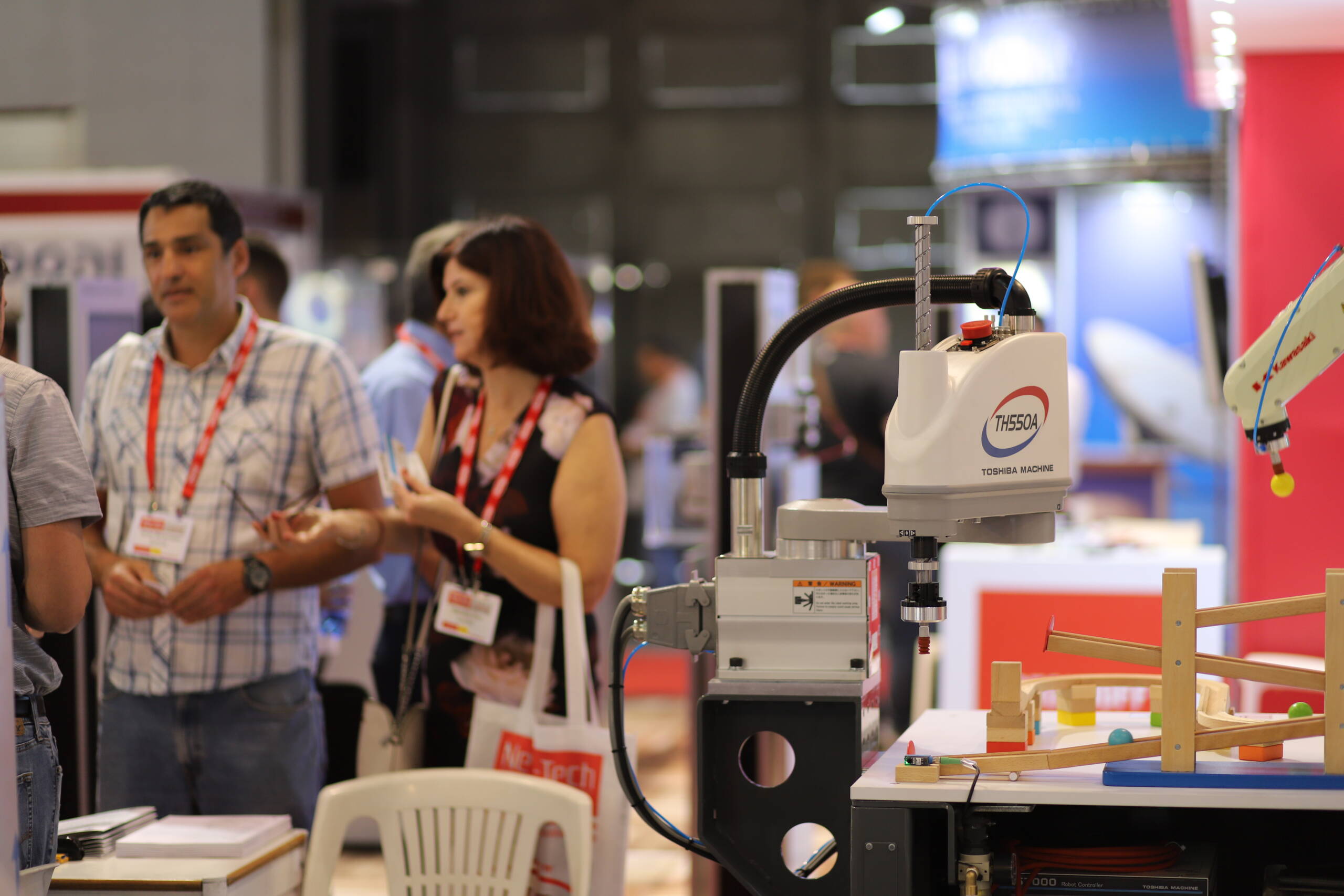
Shot with Canon R100 and a TTArtisan 50mm f/1.2
What gives the launch weight is how directly it reframes the Bay Area’s role. San Francisco and Silicon Valley are positioned not as abstract innovation symbols, but as physical testing grounds where AI has to survive contact with reality. Motors fail, sensors drift, safety margins matter, and costs add up fast—details that never show up in glossy decks but define success or failure in the real world. According to its leadership, BARA was formed because the industry asked for a capital-focused organization that accelerates pilots and partnerships instead of endlessly extending the conversation phase. By bringing together humanoid, industrial, service, and mobility robotics under one umbrella, the association implicitly admits that embodied AI won’t arrive neatly categorized. It will be fragmented, overlapping, and occasionally awkward, and that’s exactly why coordinated structures matter.
The international posture is another telling signal. Rather than treating global collaboration as a future ambition, BARA launches with clear counterparts in the United States, Japan, and China. That alignment reflects where robotics progress actually happens today: deep research ecosystems, large-scale manufacturing capacity, and aggressive commercialization pressures interacting across borders. The emphasis on standards, interoperability, and deployment readiness reinforces a seriousness that goes beyond branding. These aren’t flashy topics, but they’re the difference between robots that impress on stage and systems that can operate safely and reliably in human environments.
From early 2026, the association plans to move quickly from announcement to execution, hosting member-only capital and industry sessions for qualified corporates, investors, and startups, with the first gathering planned for late February. The scale here feels intentional—fewer people, sharper focus, less noise. Alongside these sessions, members will receive curated ecosystem updates and access to a private directory designed to reduce friction in introductions and collaboration. Voices from partner organizations emphasized the value of connecting research depth, manufacturing experience, and AI-driven commercialization into a single flow rather than isolated regional strengths. Taken together, the launch of the Bay Area Robotics Association reads less like the birth of another network and more like an admission that embodied AI has outgrown informal structures. The technology is ready to move into the world, and the ecosystem around it is finally being built to keep up—even if it arrives a little later than ideal.
Upcoming tech conferences:
- Hannover Messe: Trade Fair for the Manufacturing Industry, 20–24 April 2026, Hannover, Germany
- DesignCon 2026, February 24–26, Santa Clara Convention Center, Santa Clara, California
- NICT at Mobile World Congress 2026, March 2–5, Barcelona, Spain
- Sonar Summit: A Global Conversation About Building Better Software in the AI Era, March 3, 2026
- Cybertech 2026: Proof That the Industry Is Finally Catching Up With Reality
- Chiplet Summit 2026, February 17–19, Santa Clara Convention Center, Santa Clara, California
- MIT Sloan CIO Symposium Innovation Showcase 2026, May 19, 2026, Cambridge, Massachusetts
- Humanoid Robot Forum 2026, June 22–25, Chicago, Illinois
- Supercomputing Asia 2026, January 26–29, Osaka International Convention Center, Osaka, Japan