The Return of Small Local Markets, Part 2
A city square after rain always tells the truth a bit more plainly, and here it does so with reflections stretching across the pavement like a second, softer version of the scene. The ground is still wet, slightly uneven, catching fragments of white canopy tents and the muted silhouettes of people moving between them. Nothing feels staged. It’s a working morning, maybe late morning, where routine quietly meets resilience.
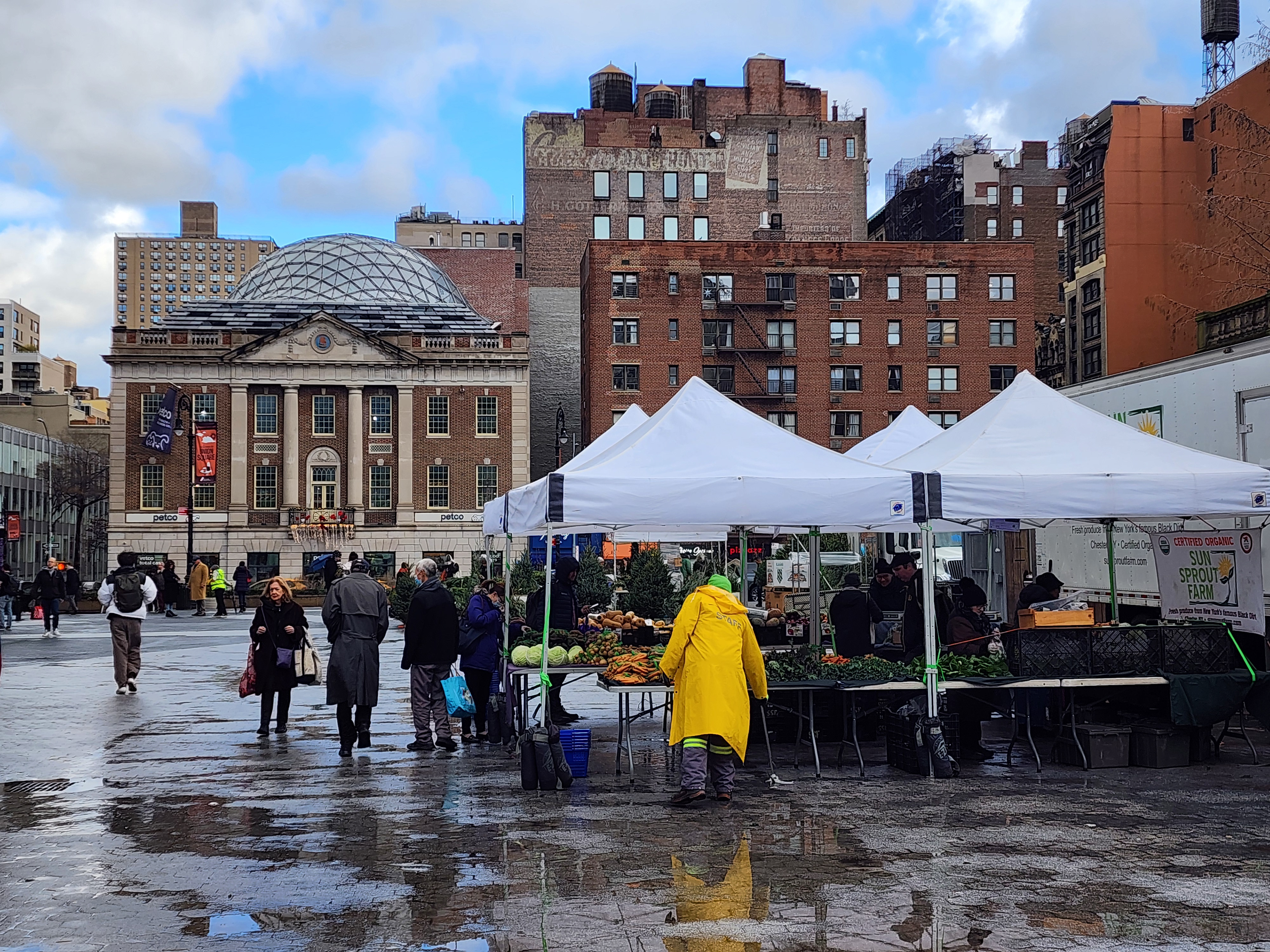
At the center, a cluster of temporary market stalls stands under clean white tents, their geometry almost too neat against the textured chaos of the surrounding buildings. Beneath them, tables are filled with produce—greens, root vegetables, bundles that look freshly pulled from soil rather than warehouses. A vendor in a bright yellow raincoat becomes the accidental focal point, not because of intention, but because of contrast. That flash of color cuts through the gray sky, the brick tones, the wet concrete. It signals presence, effort, someone actually standing behind what’s being sold.
Around the stalls, people drift rather than rush. Coats are heavy, steps are careful on the slick ground. A few carry bags, not the uniform plastic kind but mixed—totes, reusable fabric, whatever works. Conversations seem implied rather than visible, the kind that happen in short exchanges: “How much?” “Fresh today?” “I’ll take two.” There’s a tempo here that doesn’t match supermarkets or delivery apps. It’s slower, but not inefficient—just grounded.
Behind all this, the architecture tells another layer of the story. Older brick buildings rise with visible wear—faded signage, rooftop water towers, fire escapes tracing vertical lines like afterthoughts. And then that domed structure sits slightly left of center, almost classical in posture, as if reminding the scene that cities once built spaces meant for gathering, not just passing through. The market feels like it belongs to that older logic.
This is what the return of small local markets looks like in practice—not romantic, not overly curated, just functional and human. Temporary setups in permanent cities. They reclaim space without redesigning it. A parking area, a plaza, a wide sidewalk—suddenly becomes a place of exchange that isn’t purely transactional.
What stands out is the balance. Trucks are still parked nearby, logistics still exist, but they stay at the edges. The center belongs to people and produce. Even the imperfections—puddles, uneven reflections, slightly sagging tent fabric—reinforce the point. This isn’t optimized retail. It’s adaptive, responsive, almost improvised.
And maybe that’s the quiet shift. Not a rejection of scale, but a reintroduction of proximity. Food that hasn’t traveled as far. Sellers who are visible. Buyers who linger just a little longer than necessary. The city, for a moment, folding back into something more local than it usually allows.