NYC Sidewalk Sheds and Local Law 11: Why the Shed Is Cheaper Than the Repair
Walk any dense block in Manhattan and you will pass under one. Green pipe, plywood deck, a contractor’s sign zip-tied to the netting, a permit number nobody has read in years. The structure is called a sidewalk shed, and the official story is that it is temporary. It protects pedestrians while the facade above gets fixed.
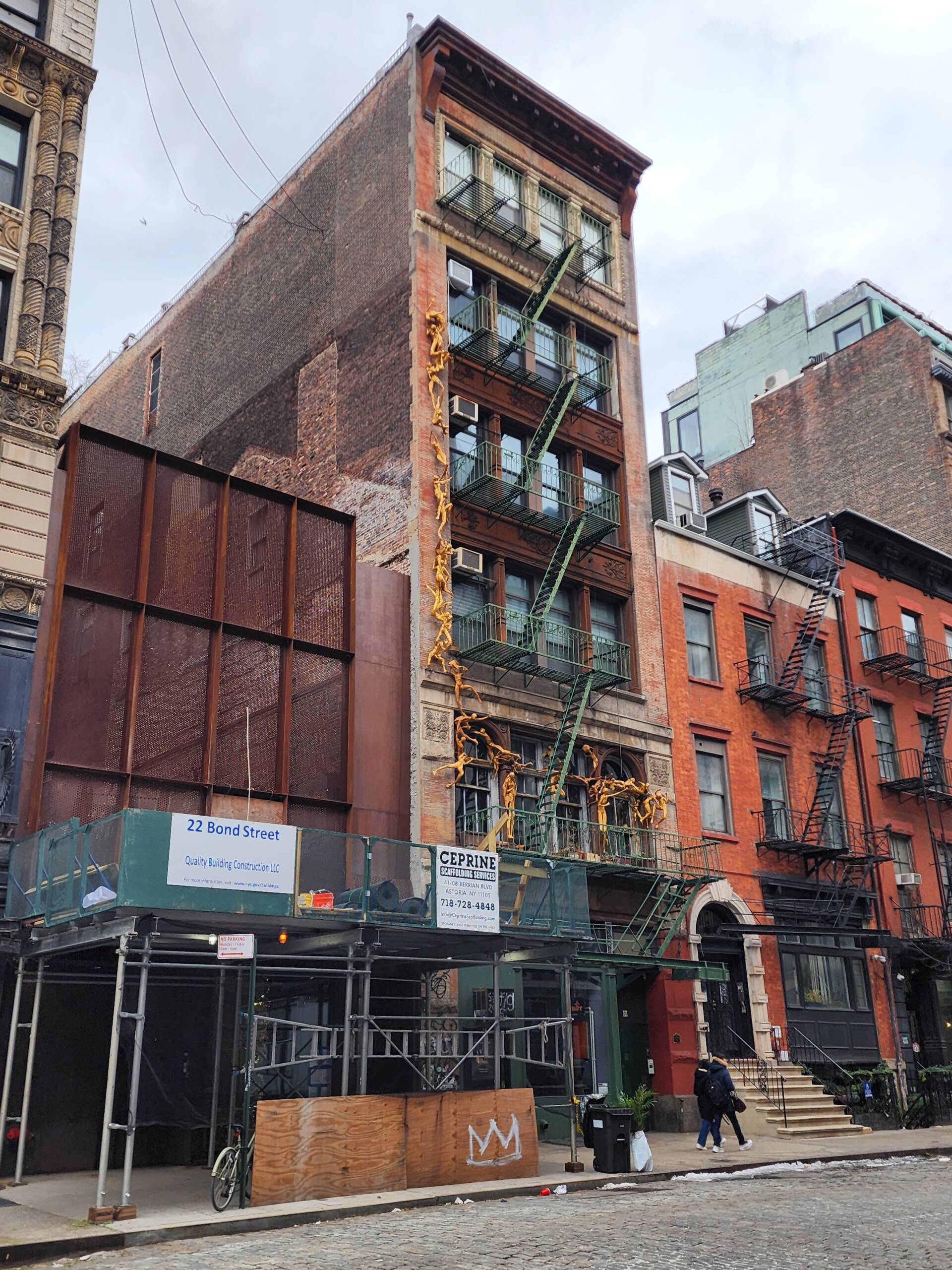
The unofficial story is that for a large number of buildings, the shed is not a stage in the repair. It is what happens instead of the repair, for as long as the owner can stand it.
That is not a conspiracy. It is arithmetic.
How the city ended up with 400 miles of plywood
In 1979 a Barnard student was killed by a piece of falling terra cotta. Local Law 10 followed in 1980, requiring periodic facade inspections. After another run of facade failures in the late nineties, Local Law 11 tightened it: buildings over six stories get a hands-on inspection every five years, filed by a qualified architect or engineer, and the building comes back rated Safe, Safe With a Repair and Maintenance Program, or Unsafe.
An Unsafe rating triggers a shed within thirty days. That part works. Debris falls onto plywood instead of onto people, and the city has not had a repeat of the deaths that produced the law.
What the law never priced properly is the gap between putting the shed up and taking it down. Once the shed exists, the hazard is contained. The pedestrian is safe. The clock that mattered has stopped, and a much slower clock has started.
The numbers that decide it
A sidewalk shed runs roughly $125 to $150 per linear foot, which covers installation and the first three months. After that you are renting, at something like five to six percent of the install cost per month.
Take a 165-foot frontage. Call it $22,000 to put up, then $1,300 or so a month to leave standing. About fifteen thousand dollars a year.
Now price the actual work. DOB data has put average Local Law 11 repairs somewhere north of $6,500 per linear foot of facade. A mid-size building with moderate work lands around half a million. Landmarked, cast-iron, or badly deferred buildings cross a million without difficulty.
So the annual carrying cost of doing nothing is roughly three percent of the cost of doing something. An owner could rent that shed for thirty years and still not have spent what the repair would cost today.
Nobody sits down and decides to leave a shed up for a decade. They decide, one budget cycle at a time, not to spend half a million dollars this year. Ten of those decisions look identical from the sidewalk.
Who is actually making the call
Most of these buildings are co-ops and condos, which means the decision belongs to a volunteer board that has to face its own neighbors.
Fixing the facade means a capital assessment. Split half a million across forty units and every shareholder owes twelve thousand dollars, on a schedule they did not choose, in a building where several of them are retired and cash-poor.
Leaving the shed up means thirty-odd dollars a month per unit, buried in the common charges, invisible.
Boards stand for election. This is not a hard vote.
Nobody in the chain gets paid to finish
At the peak there were around nine thousand active sheds in the city, covering close to four hundred miles of sidewalk, averaging well over a year old apiece. The rental value of that is on the order of $150 million a year.
It is worth sitting with what kind of business that is. The scaffolding company earns its money from the interval between installation and removal. Extend the interval and revenue goes up with no additional labor, no additional risk, no additional anything. The vendor is not sabotaging the repair. The vendor simply has no reason to care whether it ever begins.
The engineer who files the inspection gets paid for the filing. The city, until recently, got a permit renewal fee. Everyone in the chain has been made whole by the shed standing there.
The people who pay are not in the room
They are on the sidewalk, or renting the retail space underneath.
A joint city and Mastercard study found that cardholders spend thousands less per month at businesses covered by a shed, with restaurants and bars taking the worst of it, losing meaningful weekly transaction volume in the months after a shed goes up. A ground-floor tenant can lose the business over a structure erected to protect a facade they do not own, on a timeline they have no vote in.
Add the darkness, the trapped garbage, the narrowed walkway, the way a covered block stops feeling like somewhere you would linger. None of that appears on the building’s balance sheet, which is precisely why it persists.
What the city is finally trying
The Get Sheds Down initiative launched in July 2023 and has genuinely moved units. More than fifteen thousand sheds removed, including several hundred that had stood for five years or more. The record holders make the point better than the aggregate: twenty-one years at a Harlem landmark, fifteen at the Chief Medical Examiner’s own building, close to two decades at a Brooklyn courthouse. City-owned property was among the worst offenders.
The 2025 legislative package went after the incentive rather than the eyesore. Shed permits dropped from one year to ninety days, and renewals now require a design professional to file a written explanation of the delay. Since January 2026 there are milestone deadlines with teeth: months to file construction documents, months more for a work permit, two years to finish, with penalties running from five to twenty thousand dollars. Sheds standing past 180 days can draw monthly right-of-way penalties of up to $6,000.
Here is the honest read on whether that is enough. Six thousand a month is seventy-two thousand a year. Against a $500,000 repair, an owner can absorb roughly seven years of maximum penalties before the fines equal the fix, and the fines are operating expense paid monthly while the repair is a lump sum requiring financing and a shareholder vote. For a small brownstone job the math now genuinely flips. For a seven-figure landmark facade it does not, not yet.
The more promising lever is the one that reduces how many sheds are needed at all. From October the inspection interval stretches from a fixed five years to a range, with well-maintained low-risk buildings potentially going as long as twelve, and new construction waiting nine years for a first inspection instead of five. Sheds around unsafe facades are now capped at extending forty feet from the building rather than half its height, which frees up enormous amounts of covered open space on campuses and housing developments. Containment netting is permitted where there is no public access underneath.
Fewer inspections is a strange-sounding fix for a safety program. The argument is that the five-year cycle was never derived from anything. It was the number the legislature picked in 1980, and it generates a steady flow of Unsafe ratings, each of which produces a shed that then has no reason to come down.
Forty-five years in, the city has roughly 7,800 sheds standing. That is down about 17 percent from the peak, which is real progress and also a reminder of the size of the thing.
The shed was designed as a temporary structure. It became a line item.